
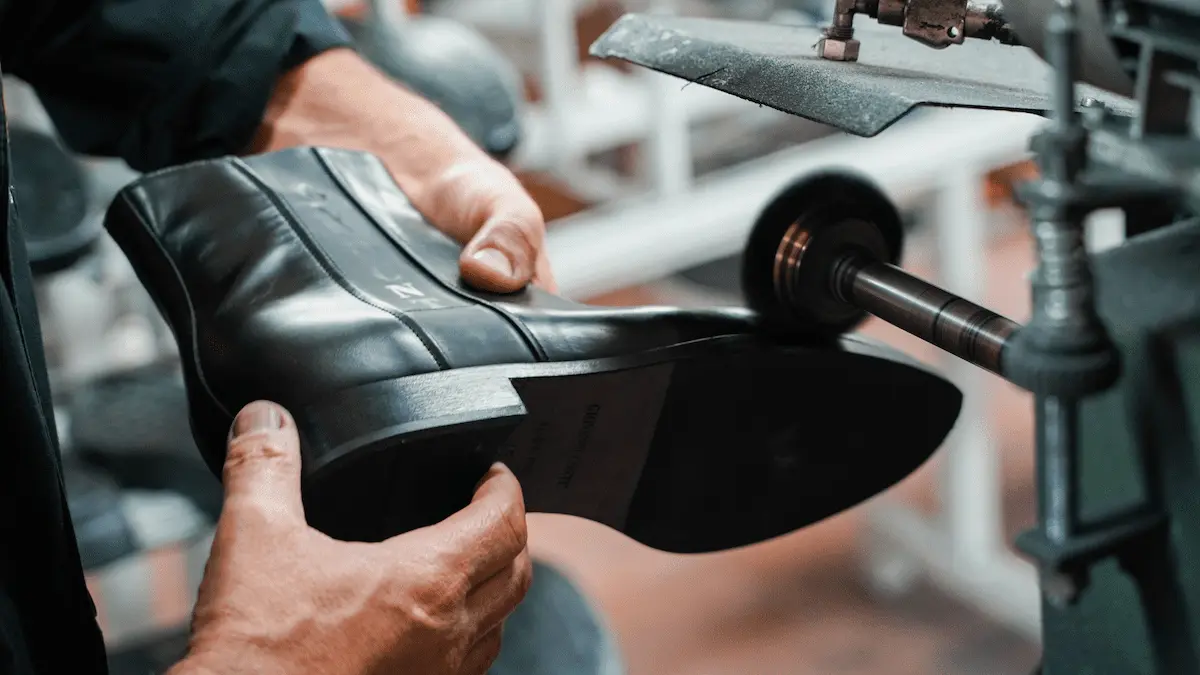
Agra is known worldwide for the Taj Mahal. But beyond this iconic identity lies another remarkable legacy—footwear.
For generations, footwear-making has been part of Agra's economic and social fabric. According to the Agra Footwear Manufacturers & Exporters Chamber (AFMEC), the cluster includes around 250 mechanised and semi-mechanised units and 5,000 cottage industries, supporting nearly 400,000 jobs. It is a major contributor to India's domestic footwear market and exports.
But these numbers tell only part of the story.
Behind the factories and export houses is a vast network of skilled workers, micro-enterprises, component suppliers and traders. Across workshops, homes and small production units, people specialise in stitching, uppers, soles, pasting, finishing and sampling. Much of this capability is highly skilled, yet remains largely invisible beyond established local networks.
The Challenge Is Not Always Capability. It Is Access.
A skilled worker may produce quality work for years without knowing how to build an independent enterprise. A small unit may supply established manufacturers but never develop its own market identity. A trader may understand the local market but have limited access to wider buyers, industry knowledge or digital tools.
The gap is often about access—to information, markets, technology, institutional support and business networks.
India already has a strong ecosystem of MSME schemes, training institutions, industry associations and digital-market initiatives. Programmes linked to MSME development, ODOP and ONDC are creating new possibilities for technology adoption, market access and enterprise growth.
The next challenge is to make these opportunities easier to discover, understand and use.
The Next Decade Will Be About Intelligent Access
Digital transformation is changing how businesses are discovered and connected. Increasingly, a business will be searched for online before its owner ever speaks to a customer.
For large companies, this is already routine.
The greater opportunity is to ensure that small manufacturers, traders and enterprises—even those operating from remote or underserved locations—are not left behind.
Imagine a skilled footwear unit working from a narrow lane in Agra. It may have years of experience and excellent production capability, yet remain dependent on a handful of local contacts because it has little digital visibility.
AI-enabled platforms can begin to change this equation.
They can help businesses build discoverable profiles, communicate their capabilities, access relevant knowledge, understand policies and schemes, explore market information and connect with wider networks. Over time, AI can make search, discovery and access to information more intelligent, relevant and personalised.
Local capability → Digital presence → Intelligent discovery → Knowledge → Connections → Opportunity
This does not mean every micro-enterprise will become a global exporter overnight. It means more capable enterprises can get a fairer opportunity to participate in growth.
Where Business Tokri Fits In
This is the space Business Tokri is building for.
Business Tokri is evolving as a video-first, AI-enabled digital business ecosystem for MSMEs, manufacturers, traders and emerging enterprises.
Its vision goes beyond business profiling. The platform can become a supporting layer connecting different parts of the enterprise ecosystem:
- play_arrow Business visibility and authentic video storytelling
- play_arrow AI-enabled discovery
- play_arrow Industry and market knowledge
- play_arrow MSME policies, schemes and institutional information
- play_arrow Learning and capability-building resources
- play_arrow Business networks and emerging opportunities
For a footwear manufacturer, this can mean greater visibility. For a component supplier, easier discovery. For a small trader, access to wider networks. For an aspiring entrepreneur, a clearer understanding of the sector and its opportunities.
Business Tokri does not seek to replace government programmes, industry associations, training institutions or marketplaces.
Its potential role is to help connect the ecosystem and make access easier.
From Agra to a Larger Vision
Agra's footwear cluster is a powerful starting point because the ecosystem already exists—manufacturers, exporters, skilled workers, micro-units, traders, suppliers, institutions and industry associations.
The next opportunity is to connect these layers more effectively.
Over the coming decades, AI could transform how even the smallest business searches, learns, communicates and discovers opportunities. A trader in a remote market could build a credible digital presence. A micro-manufacturer could become visible beyond geographical boundaries. A skilled worker could access knowledge that supports the journey from capability to entrepreneurship.
This is where platforms such as Business Tokri can become more than digital destinations. They can evolve into supporting infrastructure for inclusive MSME growth.
The Viksit Bharat Opportunity
Viksit Bharat will not be built by large corporations alone. It will also depend on how effectively millions of MSMEs, small traders, manufacturers and skilled workers participate in India's next phase of growth.
The opportunity is to ensure that geography, limited networks or lack of information do not continue to hide capability.
Make businesses easier to discover.
Make knowledge easier to access.
Make opportunities easier to understand.
Make growth more accessible.
For Business Tokri, this is the long-term vision: to build a trusted, AI-enabled ecosystem where enterprises can showcase their capabilities, learn continuously, connect meaningfully and discover new opportunities.
Agra's footwear industry is an important beginning. But the ambition is larger—from local enterprise to wider markets, and from hidden capability to visible opportunity.
Business Tokri — Showcase. Connect. Learn. Grow.
www.businesstokri.com